
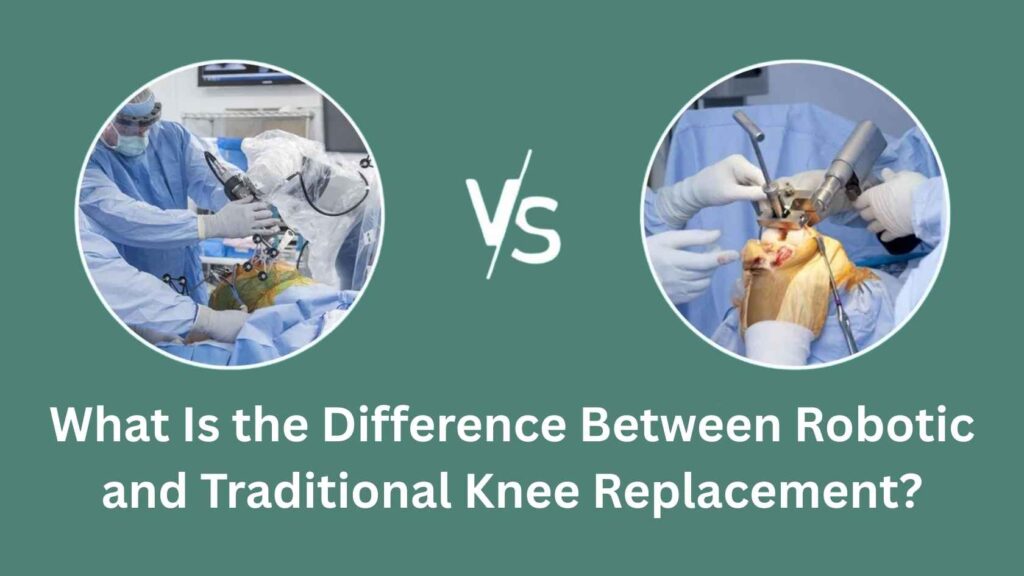
What Is the Difference Between Robotic and Traditional Knee Replacement? This is a common question among patients exploring surgical options for severe knee joint damage. Knee replacement surgery has been performed successfully for decades, helping individuals regain mobility and reduce chronic pain. In Kerala, patients today have access to both traditional knee replacement and advanced robotic-assisted techniques. Understanding how these two approaches differ helps patients make informed decisions about their treatment.
Both robotic and traditional knee replacement aim to relieve pain, restore joint function, and improve quality of life. However, they differ in surgical planning, precision, implant positioning, and technological involvement.
Understanding Traditional Knee Replacement
Traditional knee replacement, also called conventional knee replacement, is a well-established surgical procedure. In this method, the surgeon uses manual instruments and standard alignment guides to remove damaged bone and cartilage from the knee joint and place artificial implants.
Key Features of Traditional Knee Replacement
Manual surgical instruments
Standard alignment guides
Surgeon-dependent bone cuts
Long history of clinical success
Proven long-term outcomes
Traditional knee replacement relies heavily on the surgeon’s experience, skill, and judgment for alignment and implant placement.
Understanding Robotic Knee Replacement
Robotic knee replacement is an advanced, technology-assisted procedure. It uses computer-guided planning software and robotic systems to help the surgeon perform the operation with enhanced precision.
It is important to understand that the robot does not perform the surgery independently. The surgeon remains in full control at all times. The robotic system assists by providing real-time data and improving accuracy.
Key Features of Robotic Knee Replacement
Pre-operative digital planning
3D imaging and mapping
Real-time alignment tracking
Precision-guided bone preparation
Customized implant positioning
Robotic technology enhances accuracy while maintaining surgeon control.
Difference in Pre-Surgical Planning
Traditional Knee Replacement
Planning is based on:
Standard X-rays
Manual measurements
Experience-based alignment decisions
The surgical plan is created using traditional imaging and surgical judgment.
Robotic Knee Replacement
Planning includes:
Detailed 3D mapping
Computer-assisted modeling
Personalized alignment goals
Digital surgical simulation
Robotic systems allow surgeons to plan implant positioning with high precision before entering the operating room.
Difference in Surgical Precision
One of the main differences lies in precision.
Traditional Method
Bone cuts are performed manually using mechanical guides. While experienced surgeons achieve excellent outcomes, slight variations may occur.
Robotic Method
The robotic system:
Guides bone preparation
Limits unnecessary bone removal
Enhances alignment accuracy
Provides real-time feedback
This may result in improved implant positioning consistency.
Difference in Implant Alignment
Proper implant alignment is crucial for long-term joint function and implant longevity.
Traditional Knee Replacement
Alignment depends on mechanical guides and surgical skill.
Robotic Knee Replacement
Alignment is digitally planned and verified during surgery, helping achieve:
Balanced soft tissues
Improved joint stability
Accurate implant placement
Precise alignment may contribute to smoother knee movement.
Difference in Soft Tissue Balancing
Soft tissue balance affects how natural the knee feels after surgery.
Traditional Technique
Soft tissue balancing is based on manual assessment.
Robotic Technique
Robotic systems measure ligament tension and joint balance in real time, allowing fine adjustments for optimal stability.
Difference in Bone Preservation
Robotic assistance allows surgeons to remove only the necessary amount of bone.
Traditional surgery also aims for preservation, but robotic mapping provides additional guidance for minimal bone removal.
Preserving healthy bone may support better implant fit.
Difference in Customization
Traditional knee replacement uses standardized approaches.
Robotic knee replacement offers more personalized planning based on:
Individual anatomy
Alignment variations
Joint deformity
Soft tissue condition
This level of customization may improve overall joint mechanics.
Difference in Surgical Time
Robotic knee replacement may initially take slightly longer due to system setup and digital calibration. However, with experienced teams, operating time often becomes comparable.
Difference in Recovery Experience
Recovery timelines for both procedures are generally similar. However, some studies suggest robotic alignment precision may contribute to:
Reduced soft tissue trauma
Improved early mobility
Better functional balance
Recovery still depends largely on rehabilitation commitment and overall health.
Difference in Long-Term Outcomes
Both traditional and robotic knee replacement have strong long-term success rates.
Robotic surgery aims to improve:
Implant longevity
Joint alignment consistency
Functional movement
Reduced uneven implant wear
Traditional knee replacement remains highly successful with decades of proven results.
Difference in Technology Involvement
Traditional knee replacement uses mechanical alignment tools.
Robotic knee replacement integrates:
Digital software
Navigation systems
Real-time data monitoring
Robotic-assisted guidance
Technology enhances planning and execution but does not replace surgical expertise.
Difference in Learning Curve
Traditional knee replacement techniques are widely practiced.
Robotic systems require specialized training and experience for safe and effective use.
Difference in Patient Perception
Some patients prefer robotic knee replacement due to:
Advanced technology
Perceived accuracy
Modern surgical approach
Others may choose traditional methods due to:
Long-standing track record
Familiarity
Availability
Both options can provide excellent outcomes when performed appropriately.
Similarities Between Robotic and Traditional Knee Replacement
Despite differences, both procedures share common goals:
Removal of damaged cartilage and bone
Placement of artificial knee components
Pain relief
Improved mobility
Enhanced quality of life
The primary objective remains the same—restoring joint function.
Is One Better Than the Other?
There is no universal answer. The best option depends on:
Severity of knee damage
Joint deformity
Overall health
Surgeon expertise
Availability of technology
Patient expectations
Robotic knee replacement may offer enhanced precision, while traditional knee replacement remains a reliable and proven option.
Who May Benefit More from Robotic Knee Replacement?
Patients with:
Severe alignment deformities
Complex knee anatomy
Significant ligament imbalance
Desire for customized planning
may particularly benefit from robotic precision.
Cost Consideration
Robotic knee replacement may involve higher costs due to advanced technology and equipment. Traditional knee replacement may be comparatively less expensive.
Patients should consider value, safety, and long-term outcomes when evaluating cost differences.
Safety Comparison
Both methods are considered safe when performed by experienced surgical teams.
Complication risks such as:
Infection
Blood clots
Stiffness
Implant wear
are generally similar between the two approaches.
Making an Informed Decision
Choosing between robotic and traditional knee replacement should involve:
Detailed consultation
Imaging evaluation
Discussion of expectations
Understanding risks and benefits
An informed patient is better prepared for surgery and recovery.
Final Thoughts
The difference between robotic and traditional knee replacement lies primarily in surgical planning, technological assistance, and alignment precision. Traditional knee replacement has a long history of success and reliability, while robotic knee replacement enhances accuracy through digital guidance and real-time feedback. Both approaches aim to relieve pain and restore mobility effectively. For individuals exploring knee replacement options in Kerala, understanding these differences helps in making confident and informed decisions about the most suitable surgical approach.
Frequently Asked Questions
The main difference lies in technology. Robotic knee replacement uses computer-assisted planning and robotic guidance for improved precision, while traditional knee replacement relies on manual instruments and mechanical alignment guides.
No, the surgeon performs the surgery. The robotic system assists by providing real-time data and improving alignment accuracy, but the surgeon remains in full control.
Robotic systems are designed to enhance precision in bone preparation and implant positioning, potentially improving alignment consistency compared to manual techniques.
Recovery timelines are generally similar for both methods. However, improved alignment and soft tissue balancing in robotic surgery may support smoother early mobility in some patients.
Both procedures are considered safe when performed by experienced surgical teams. The overall complication risks are generally similar.
Robotic planning allows for precise bone preparation and may help preserve healthy bone by removing only what is necessary.
Yes, traditional knee replacement has decades of proven success and continues to provide excellent long-term outcomes.
Patients with significant knee deformities, complex anatomy, or alignment issues may benefit from the enhanced precision of robotic assistance.
Robotic knee replacement may involve higher costs due to advanced technology and equipment compared to conventional methods.
The decision depends on factors such as knee condition, medical health, surgical expertise, available technology, and personal preference after a detailed consultation.

Dr. Muhammed Thameem Puthukkattu is Kerala’s foremost authority in knee replacement surgery, specializing in advanced non-robotic,hip and robotic-assisted techniques that ensure precision and optimal outcomes.