
Total knee replacement is a well-established surgical procedure designed to relieve chronic knee pain and restore mobility in individuals affected by severe knee joint damage. The knee is one of the most complex and heavily used joints in the human body, and when it becomes worn out or diseased, everyday activities such as walking, climbing stairs, or standing for long periods can become extremely painful. Total knee replacement offers a long-term solution by replacing the damaged joint surfaces with specially designed artificial components that allow smoother, pain-free movement.
Understanding the Knee Joint
The knee joint is formed by the meeting of three bones—the thigh bone, shin bone, and kneecap. These bones are normally covered with smooth cartilage that allows effortless movement and absorbs shock during daily activities. Over time, this cartilage can wear away due to aging, arthritis, injury, or deformity, leading to bone-on-bone contact. This results in pain, stiffness, swelling, and reduced function, which often cannot be managed effectively with medications or physiotherapy alone.
Why Total Knee Replacement Is Needed
Total knee replacement is recommended when knee pain and stiffness significantly interfere with quality of life and non-surgical treatments no longer provide relief. Conditions such as advanced osteoarthritis, rheumatoid arthritis, post-traumatic arthritis, and severe knee deformities can progressively damage the joint. When pain becomes persistent, sleep is disturbed, and daily tasks are limited, replacing the damaged joint surfaces becomes a reliable option for long-term improvement.
What Happens During Total Knee Replacement
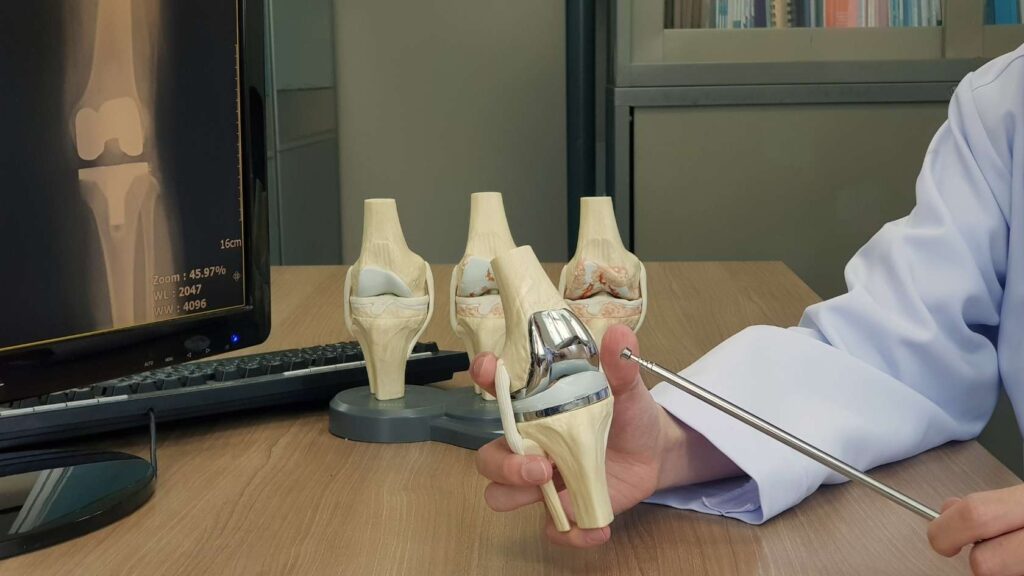
In total knee replacement, the damaged cartilage and a small amount of underlying bone are carefully removed from the knee joint. These surfaces are then replaced with durable metal and medical-grade plastic components designed to replicate natural knee movement. The artificial joint is aligned precisely to restore proper leg position, improve stability, and allow smooth bending and straightening of the knee.
Materials Used in Knee Replacement Implants
The implants used in total knee replacement are made from highly durable materials such as cobalt-chromium alloys, titanium, and high-density polyethylene. These materials are biocompatible and engineered to withstand years of movement and weight-bearing. The design of modern implants focuses on mimicking natural knee motion while reducing wear over time.
Benefits of Total Knee Replacement
The primary benefit of total knee replacement is significant pain relief. Most individuals experience a dramatic reduction in knee pain within weeks of surgery. In addition to pain relief, the procedure improves joint stability, restores mobility, and allows patients to return to normal daily activities. Many people regain the ability to walk comfortably, climb stairs, and participate in low-impact physical activities.
Longevity of a Replaced Knee Joint
Modern knee replacement implants are designed to last many years. With proper alignment, good bone quality, and adherence to rehabilitation and lifestyle guidance, a replaced knee can function well for 15 to 20 years or longer. Advances in surgical techniques and implant design continue to improve long-term outcomes and durability.
Safety and Advancements in Knee Replacement
Total knee replacement has become one of the most successful and commonly performed orthopedic procedures worldwide. Continuous advancements in surgical planning, implant technology, and rehabilitation protocols have made the procedure safer and more precise. In regions like Ernakulam, access to modern joint replacement care allows patients to benefit from these evolving techniques and improved recovery pathways.
When to Consider Total Knee Replacement
Total knee replacement is typically considered when knee pain becomes constant, mobility is significantly restricted, and conservative treatments fail to provide relief. The decision is based on symptom severity, joint damage, functional limitations, and overall health rather than age alone. With appropriate evaluation and preparation, total knee replacement can offer lasting pain relief and improved quality of life for individuals seeking advanced joint care in Ernakulam.
Total knee replacement is suitable for individuals with severe knee pain, stiffness, and joint damage that no longer improves with medications, injections, or physiotherapy. Candidates
The cost of total knee replacement varies based on implant type, surgical technique, hospital stay, and rehabilitation requirements, so an individualized evaluation is essential. Cost
During a consultation, the orthopedic surgeon evaluates symptoms, knee function, X-ray/MRI reports, medical fitness, lifestyle needs, and treatment history to decide whether surgery is necessary — Consultation.
Patients should ask about the necessity of surgery, procedure details, implant type, benefits, risks, hospital stay, recovery time, rehabilitation, and long-term expectations — Questions to Ask.
Total knee replacement is generally safe and highly successful, though complications like infection, bleeding, blood clots, stiffness, or implant wear may rarely occur, which can be minimized with expert care — Risks and Safety.
Preparation includes medical evaluation, medication review, pre-surgery exercises, home planning, and understanding the procedure and recovery process. Preparation
The procedure involves removing damaged joint surfaces, placing artificial components, restoring alignment, and closing the joint with postoperative care. Steps
Recovery typically includes pain control, early mobilization, physiotherapy, gradual strength improvement, and regular follow-up visits. Recovery
Most patients experience significant pain relief, improved knee function, better mobility, and enhanced quality of daily activities. Results
Before-and-after results often show reduced pain, improved joint alignment, increased walking ability, and better overall knee movement. Before and after
Choosing the right surgeon involves assessing experience, specialization in joint replacement, patient outcomes, and clear communication. Choosing the right surgeon