
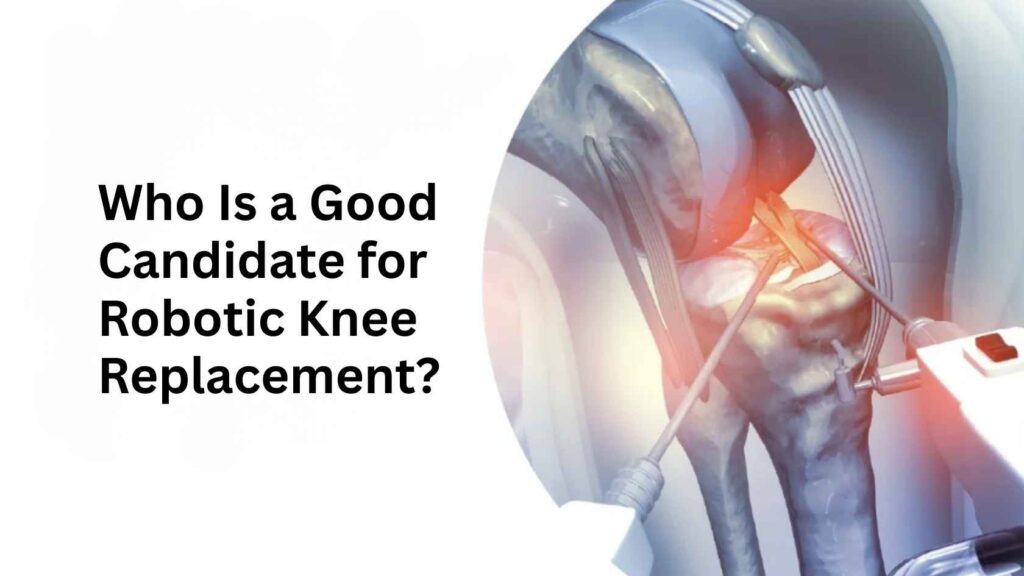
Who Is a Good Candidate for Robotic Knee Replacement?
Robotic knee replacement is an advanced surgical procedure designed to improve accuracy, alignment, and long-term outcomes for individuals suffering from severe knee joint damage. In Kerala, many patients are increasingly exploring robotic knee replacement as a precise and technology-assisted option for restoring mobility and reducing chronic knee pain. However, not everyone with knee discomfort is an ideal candidate. Understanding who qualifies for this procedure is essential before making a treatment decision.
Robotic knee replacement is typically recommended when conservative treatments fail and knee damage significantly affects quality of life. The suitability for this procedure depends on medical condition, severity of joint damage, overall health, and functional limitations.
Understanding Robotic Knee Replacement Eligibility
A good candidate for robotic knee replacement is someone whose knee joint has sustained substantial structural damage and who experiences persistent pain despite non-surgical treatments. The robotic system enhances precision, but candidacy depends primarily on medical necessity rather than preference for advanced technology.
Evaluation focuses on:
Degree of cartilage loss
Alignment abnormalities
Joint deformity
Functional limitations
Overall physical fitness
A detailed consultation and imaging studies are required to confirm suitability.
Patients with Advanced Knee Arthritis
The most common candidates for robotic knee replacement are individuals with advanced arthritis of the knee joint.
Osteoarthritis
Osteoarthritis causes gradual cartilage wear, leading to bone-on-bone contact. Symptoms include pain, stiffness, swelling, and limited movement.
Rheumatoid Arthritis
An autoimmune condition that damages joint lining and cartilage, leading to deformity and instability.
Post-Traumatic Arthritis
Develops after fractures or injuries affecting knee alignment and cartilage health.
When arthritis becomes severe and significantly limits daily activities, robotic knee replacement may be considered.
Persistent Knee Pain Affecting Daily Life
Candidates often experience:
Pain while walking
Pain during standing or sitting for long periods
Difficulty climbing stairs
Night pain affecting sleep
Swelling and stiffness
Knee instability
If knee pain interferes with independence and daily functioning, surgical treatment may be appropriate.
Failure of Conservative Treatments
Before recommending robotic knee replacement, doctors usually try non-surgical options such as:
Pain medications
Physiotherapy
Weight management
Knee braces
Injections
If these measures fail to provide long-term relief, surgical intervention becomes the next step.
Patients with Knee Deformity
Individuals with structural deformities are often strong candidates.
Common deformities include:
Bow legs (varus alignment)
Knock knees (valgus alignment)
Joint misalignment
Robotic assistance helps achieve precise correction of alignment, making it particularly useful in such cases.
Individuals Seeking Greater Surgical Precision
Some patients may be suitable for knee replacement and prefer robotic assistance due to:
Desire for improved alignment accuracy
Need for customized implant positioning
Concern about implant longevity
Robotic systems allow detailed pre-surgical planning tailored to individual anatomy.
Age Considerations
Age alone does not determine candidacy.
Middle-Aged to Older Adults
Most robotic knee replacements are performed in patients between 50 and 80 years old.
Younger Patients
Younger individuals with severe arthritis, sports injuries, or post-traumatic damage may also qualify.
Older Patients
If medically fit, older adults can safely undergo robotic knee replacement.
Medical fitness is more important than chronological age.
Patients with Good Overall Health
A good candidate should be medically stable. Doctors evaluate:
Heart health
Lung function
Diabetes control
Blood pressure levels
Infection risk
Stable health improves surgical safety and recovery outcomes.
Patients Motivated for Rehabilitation
Successful robotic knee replacement depends on post-operative rehabilitation. Ideal candidates are:
Willing to attend physiotherapy
Committed to exercises
Ready to follow medical advice
Motivated to regain mobility
Rehabilitation plays a crucial role in long-term success.
Who May Not Be an Ideal Candidate?
Robotic knee replacement may not be recommended for individuals with:
Active infection
Uncontrolled diabetes
Severe heart disease without clearance
Severe muscle weakness
Poor bone quality
Extreme obesity without medical optimization
In such cases, doctors may first stabilize medical conditions before considering surgery.
Role of Imaging in Determining Candidacy
Advanced imaging studies help confirm suitability.
These include:
Weight-bearing X-rays
Alignment analysis
Bone quality assessment
Joint space evaluation
Robotic systems rely on accurate imaging to create personalized surgical plans.
Importance of Realistic Expectations
Candidates should understand:
Pain relief is gradual
Rehabilitation is essential
Full recovery takes time
Implant lifespan depends on care and activity
Clear expectations improve satisfaction after surgery.
Lifestyle Factors That Support Candidacy
Healthy lifestyle habits improve outcomes:
Maintaining ideal body weight
Avoiding smoking
Controlling blood sugar
Staying physically active
Patients who optimize their health before surgery tend to recover better.
Psychological Readiness
Mental preparation is important. Good candidates:
Understand risks and benefits
Have realistic goals
Are mentally prepared for recovery
Participate actively in treatment decisions
Confidence and awareness support smoother recovery.
Individualized Decision-Making
Every knee joint is different. Final candidacy is determined after:
Detailed consultation
Physical examination
Imaging review
Discussion of expectations
Robotic knee replacement is not chosen based on technology alone but on clinical need and patient suitability.
Benefits for the Right Candidate
When performed on suitable individuals, robotic knee replacement may offer:
Improved implant alignment
Better joint balance
Enhanced mobility
Long-term durability
Increased confidence in walking
These outcomes depend on proper patient selection.
Long-Term Outlook
Most well-selected candidates experience significant improvement in quality of life. Chronic pain decreases, mobility improves, and daily activities become easier.
Technology enhances precision, but careful evaluation remains the foundation of success.
Final Thoughts
A good candidate for robotic knee replacement is someone with advanced knee joint damage, persistent pain, functional limitations, and failure of conservative treatments, while being medically stable and committed to rehabilitation. Proper evaluation ensures safe and effective treatment outcomes. For individuals exploring advanced knee care options in Kerala, understanding candidacy criteria helps make informed and confident decisions about robotic knee replacement.
Frequently Asked Questions
1. Who is considered a good candidate for robotic knee replacement?
A good candidate is someone with severe knee joint damage, persistent pain, limited mobility, and failure of non-surgical treatments such as medications or physiotherapy.
2. Is robotic knee replacement suitable for all arthritis patients?
Robotic knee replacement is usually recommended for patients with advanced osteoarthritis, rheumatoid arthritis, or post-traumatic arthritis that significantly affects daily life.
3. Can younger patients undergo robotic knee replacement?
Yes, younger patients with severe knee damage or joint deformity may be suitable if conservative treatments no longer provide relief.
4. Is age a deciding factor for robotic knee replacement?
Age alone is not the deciding factor. Overall health, knee damage severity, and functional limitations are more important considerations.
5. Do I need to try other treatments before robotic knee replacement?
Yes, doctors typically recommend medications, physiotherapy, weight management, or injections before considering surgery.
6. Can patients with bow legs or knock knees benefit from robotic knee replacement?
Yes, patients with alignment issues such as bow legs or knock knees may benefit from the precision and alignment accuracy offered by robotic assistance.
7. Are overweight patients eligible for robotic knee replacement?
Overweight patients can undergo robotic knee replacement, but weight management may be advised to improve safety and long-term results.
8. What medical conditions can affect eligibility?
Uncontrolled diabetes, severe heart disease, active infection, or poor bone quality may delay or restrict eligibility until medically optimized.
9. Is good physical health important before robotic knee replacement?
Yes, stable heart function, controlled blood sugar, good lung health, and overall medical fitness are important for safe surgery and recovery.
10. How is candidacy confirmed for robotic knee replacement?
Doctors confirm eligibility through physical examination, imaging studies, medical history review, and evaluation of pain severity and functional limitations.