
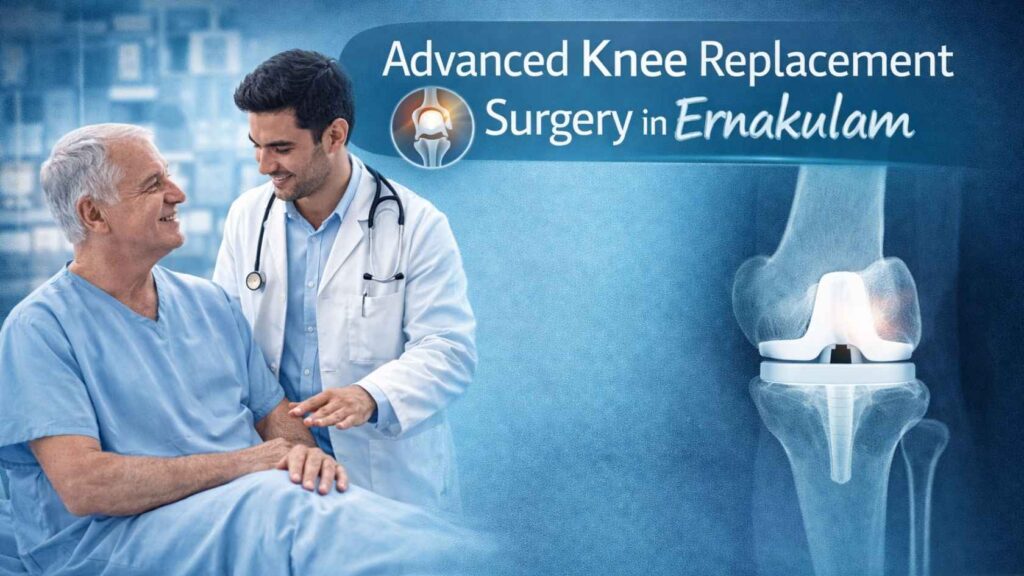
Advanced Knee Replacement Surgery in Ernakulam
Advanced knee replacement surgery in Ernakulam has evolved significantly with the introduction of modern orthopedic technologies and precision-based surgical techniques. Many individuals experiencing severe knee pain caused by arthritis, joint degeneration, or injury now seek advanced surgical solutions that provide improved accuracy and better recovery outcomes. Across Ernakulam , healthcare facilities are increasingly adopting robotic-assisted and computer-guided technologies that enhance the precision of knee replacement procedures and improve long-term joint performance.
Advanced knee replacement surgery focuses on restoring knee function, reducing chronic pain, and improving overall quality of life. By integrating modern imaging, digital surgical planning, and advanced implant placement techniques, orthopedic specialists can perform procedures with greater accuracy than traditional approaches.
Understanding how advanced knee replacement surgery works, the technologies involved, and the benefits it offers can help patients make informed decisions about treatment.
Understanding Knee Joint Damage
The knee joint connects the thigh bone, shin bone, and kneecap. It is supported by cartilage, ligaments, and surrounding muscles that allow smooth movement during walking, standing, and climbing stairs.
Healthy cartilage acts as a cushion between bones, preventing friction and absorbing shock. However, when cartilage deteriorates due to aging, arthritis, injury, or deformity, the bones begin to rub against each other.
This condition may lead to:
Persistent knee pain
Joint stiffness
Swelling around the knee
Reduced flexibility
Difficulty performing daily activities
When joint damage becomes severe and conservative treatments no longer provide relief, knee replacement surgery may be recommended.
What Is Advanced Knee Replacement Surgery
Advanced knee replacement surgery is a modern orthopedic procedure that replaces damaged knee joint surfaces with artificial implants using high-precision technologies.
Unlike traditional surgery, advanced techniques involve detailed digital planning and computer-guided systems that help surgeons place implants with greater accuracy.
These procedures aim to achieve:
Improved implant alignment
Better joint balance
Reduced surgical variability
Faster functional recovery
The goal is to restore natural knee movement while improving the durability of the implant.
Advanced Technologies Used in Knee Replacement Surgery
Modern knee replacement procedures use several advanced technologies to improve surgical outcomes.
Robotic-Assisted Knee Replacement
Robotic-assisted surgery is one of the most important innovations in orthopedic care. This technology uses computer-guided robotic systems to assist surgeons in performing highly accurate bone preparation and implant placement.
Robotic systems allow surgeons to:
Create a personalized surgical plan
Map the patient’s knee anatomy
Guide bone cutting with high precision
Optimize implant alignment
Some robotic platforms provide sub-millimetre accuracy, helping achieve better joint balance and long-term implant stability.
Computer-Navigated Knee Replacement
Computer navigation systems use digital mapping to guide surgeons during the procedure. The technology analyzes knee alignment and ligament balance in real time, helping surgeons position implants more precisely.
Benefits of computer-navigated surgery include:
Improved accuracy in implant positioning
Better ligament balancing
Reduced chances of implant misalignment
More predictable surgical outcomes
These systems provide valuable data during surgery, supporting precise decision-making.
Minimally Invasive Knee Replacement
Minimally invasive surgical techniques are another advancement in knee replacement procedures. These techniques involve smaller incisions and reduced disruption to surrounding tissues.
Potential benefits include:
Reduced surgical trauma
Less blood loss
Faster recovery
Smaller scars
Patients undergoing minimally invasive procedures may experience quicker rehabilitation compared to traditional surgery.
Hospitals Offering Advanced Knee Replacement Surgery in Ernakulam
Several hospitals and orthopedic centers in Ernakulam have introduced advanced technologies for knee replacement procedures. These facilities focus on precision-based treatment and modern surgical systems.
Some hospitals provide services such as:
Robotic-assisted total knee replacement
Robotic partial knee replacement
Computer-navigated joint replacement surgery
Bilateral knee replacement procedures
Advanced rehabilitation programs
These hospitals often use specialized robotic platforms and navigation systems designed to improve surgical accuracy and implant positioning.
Cost of Advanced Knee Replacement Surgery
The cost of advanced knee replacement surgery can vary depending on several factors, including the type of technology used, implant quality, hospital infrastructure, and rehabilitation services.
Robotic or technology-assisted knee replacement surgery may cost more than conventional procedures due to the use of advanced equipment and digital planning systems.
In many cases, the approximate cost range for robotic total knee replacement surgery may fall between ₹2,00,000 and ₹4,50,000 per knee, depending on the type of implant and hospital facilities.
However, the final cost is usually determined after a detailed medical evaluation and treatment planning.
Steps Involved in Advanced Knee Replacement Surgery
Advanced knee replacement surgery follows a structured process that ensures precision and safety.
Preoperative Planning
Before surgery, detailed imaging studies such as CT scans or specialized X-rays are performed to analyze the knee joint.
These images help surgeons:
Create a 3D model of the knee
Identify joint deformities
Plan implant size and alignment
Map surgical steps in advance
This planning stage plays a crucial role in improving surgical accuracy.
Anesthesia and Surgical Preparation
The procedure is usually performed under spinal or general anesthesia. The surgical team prepares the operating environment using strict sterile protocols to minimize infection risks.
Robotic or Computer-Guided Surgery
During the operation, robotic or computer navigation systems assist the surgeon in performing precise bone preparation and implant placement.
These systems help maintain surgical accuracy and reduce the possibility of errors.
Implant Placement
Artificial implants made from durable metal alloys and medical-grade plastic are placed on the knee joint surfaces.
These implants replicate natural joint movement and restore smooth knee function.
Final Alignment and Closure
After implant placement, the surgeon checks knee stability, alignment, and range of motion before closing the surgical incision.
Recovery After Advanced Knee Replacement Surgery
Recovery varies depending on the patient’s health, age, and rehabilitation commitment. However, advanced technologies often support quicker recovery due to improved surgical accuracy and reduced tissue damage.
Patients typically begin gentle movement soon after surgery.
Recovery involves:
Pain management
Physiotherapy exercises
Gradual return to daily activities
Regular follow-up assessments
Consistent rehabilitation helps strengthen muscles and restore joint function.
Benefits of Advanced Knee Replacement Surgery
Advanced knee replacement surgery offers several advantages compared to traditional approaches.
Common benefits include:
High surgical precision
Improved implant alignment
Better ligament balancing
Reduced postoperative pain
Faster functional recovery
Improved long-term implant durability
Many patients experience improved mobility and greater comfort after recovery.
Longevity of Knee Replacement Implants
Modern implants used in advanced knee replacement surgery are designed to last for many years.
With proper alignment and healthy lifestyle habits, implants may function effectively for 15 to 20 years or longer. Advances in implant materials and surgical techniques continue to improve long-term outcomes.
Safety of Advanced Knee Replacement Surgery
Advanced knee replacement procedures are generally considered safe when performed using modern surgical protocols and technology-assisted systems.
Key safety measures include:
Detailed preoperative planning
Precise robotic or navigation-guided surgery
Sterile operating environments
Postoperative monitoring and rehabilitation
These measures help reduce complications and support smoother recovery.
When to Consider Advanced Knee Replacement Surgery
Advanced knee replacement surgery may be considered when:
Knee pain persists despite treatment
Joint stiffness limits movement
Daily activities become difficult
Arthritis causes severe cartilage damage
Walking distance becomes significantly reduced
Early consultation with an orthopedic specialist can help determine whether advanced surgical techniques are appropriate.
Final Thoughts
Advanced knee replacement surgery in Ernakulam represents a major advancement in orthopedic care, combining modern technology with precision surgical techniques to improve joint alignment and long-term implant performance. By integrating robotic assistance, computer navigation, and minimally invasive approaches, these procedures aim to provide more accurate results and faster recovery.
For individuals experiencing chronic knee pain and mobility limitations, advanced knee replacement procedures offer an effective pathway toward improved joint function, enhanced mobility, and better quality of life in Ernakulam .
Frequently Asked Questions
Advanced knee replacement surgery is a modern orthopedic procedure that replaces damaged knee joint surfaces using technologies such as robotic assistance, computer navigation, and minimally invasive techniques to improve surgical precision and recovery.
Individuals suffering from severe knee arthritis, chronic knee pain, joint deformities, or significant cartilage damage that does not improve with medications or physiotherapy may require advanced knee replacement surgery.
Advanced knee replacement uses robotic-assisted systems or computer navigation to improve implant positioning, joint alignment, and surgical accuracy compared to traditional techniques.
Common technologies include robotic-assisted surgery, computer-navigated knee replacement, and minimally invasive surgical techniques that allow precise implant placement and improved joint balance.
Yes, when performed using modern surgical protocols and advanced technologies, knee replacement surgery is considered safe and highly effective for restoring knee function.
The procedure typically takes about one to two hours depending on the complexity of the knee condition and the surgical technique used.
Most patients begin walking within a few days after surgery, while full recovery with improved mobility may take several weeks to months with proper physiotherapy.
The cost may range approximately between ₹2,00,000 and ₹4,50,000 per knee depending on the type of implant, surgical technology used, and hospital facilities.
Modern knee replacement implants are designed to last 15 to 20 years or longer depending on surgical accuracy, implant quality, and patient lifestyle.
You should consult a specialist if knee pain persists, daily activities become difficult, and non-surgical treatments fail to provide relief.

Dr. Muhammed Thameem Puthukkattu is Kerala’s foremost authority in knee replacement surgery, specializing in advanced non-robotic,hip and robotic-assisted techniques that ensure precision and optimal outcomes.