
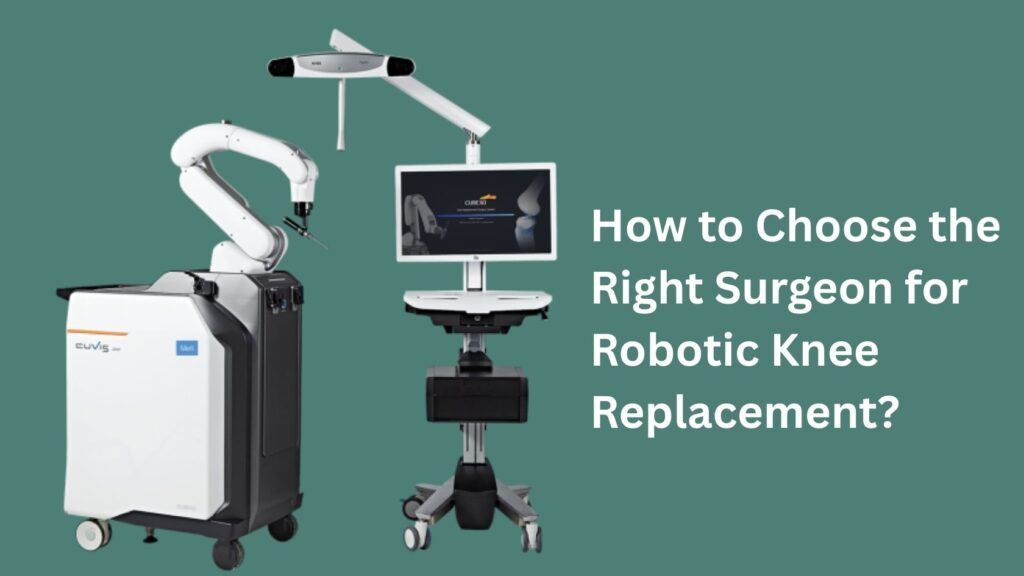
How to Choose the Right Surgeon for Robotic Knee Replacement?
How to Choose the Right Surgeon for Robotic Knee Replacement? This is one of the most important decisions a patient makes when planning advanced knee surgery. Robotic knee replacement is a precision-based procedure that combines surgical expertise with computer-assisted technology to improve implant alignment and joint balance. In Ernakulam, patients considering robotic knee replacement often focus not only on the technology itself but also on selecting the right surgeon to ensure safe and successful outcomes. Choosing the correct specialist directly influences surgical accuracy, complication risk, recovery experience, and long-term joint performance.
Robotic systems assist during surgery, but the surgeon remains in complete control. The outcome of the procedure depends significantly on the surgeon’s experience, judgment, and ability to use the robotic platform effectively. Understanding what to evaluate helps patients make confident and informed decisions.
Importance of Choosing the Right Surgeon
Robotic knee replacement is a complex orthopedic procedure. While the technology enhances precision, it does not replace clinical expertise. A well-trained surgeon:
Accurately evaluates knee damage
Determines whether robotic surgery is suitable
Plans implant alignment carefully
Performs precise bone preparation
Manages soft tissue balance
Reduces risk of complications
The right surgeon improves both immediate and long-term outcomes.
Verify Specialized Orthopedic Training
The first step is ensuring that the surgeon has specialized training in orthopedic surgery with a focus on joint replacement.
Look for:
Formal orthopedic qualifications
Advanced training in knee replacement
Experience in robotic-assisted surgery
Continuing education in advanced joint replacement techniques
Specialized training ensures technical competence.
Evaluate Experience in Robotic Knee Replacement
Robotic surgery requires additional skill beyond traditional knee replacement.
Ask about:
Number of robotic knee replacement procedures performed
Experience with specific robotic systems
Years of practice in joint replacement surgery
Experience often translates into improved surgical accuracy and smoother recovery outcomes.
Assess Knowledge of Robotic Technology
Not all surgeons who perform knee replacement are trained in robotic systems. Choosing a surgeon skilled in robotic platforms is essential.
Key considerations:
Familiarity with 3D planning software
Ability to interpret digital alignment data
Understanding of implant customization
Real-time decision-making during robotic guidance
The surgeon’s ability to use the technology effectively determines its benefits.
Review Surgical Outcomes and Success Rates
Patients should consider the surgeon’s track record.
Look for:
Consistent patient outcomes
Low complication rates
Good alignment accuracy
Positive recovery experiences
Although no surgery is risk-free, consistent outcomes reflect expertise.
Evaluate Communication and Transparency
A good surgeon:
Explains the procedure clearly
Discusses risks and benefits openly
Answers questions patiently
Sets realistic expectations
Provides detailed recovery guidance
Clear communication builds trust and reduces anxiety.
Confirm Comprehensive Pre-Surgical Evaluation
The right surgeon conducts thorough evaluation before recommending robotic knee replacement.
This includes:
Detailed medical history review
Physical examination
Imaging studies
Assessment of alignment and deformity
Evaluation of overall health
Proper evaluation ensures surgery is truly necessary.
Check Hospital Infrastructure and Support Team
Robotic knee replacement requires advanced infrastructure.
Consider whether the surgeon operates in a facility that offers:
Dedicated robotic operating theatre
Advanced sterilization systems
Experienced anesthesia team
Structured rehabilitation services
A skilled surgical team supports safer outcomes.
Understand Approach to Soft Tissue Balancing
Joint balance is crucial in robotic knee replacement.
Ask how the surgeon:
Plans ligament balancing
Ensures proper alignment
Uses robotic data for adjustments
Balanced joints feel more natural after surgery.
Consider Approach to Complication Management
Even with advanced technology, complications can occur.
The right surgeon should:
Identify risk factors early
Explain potential complications
Provide preventive strategies
Offer structured follow-up care
Preparedness improves patient safety.
Review Approach to Post-Surgery Rehabilitation
Successful robotic knee replacement depends on structured rehabilitation.
Evaluate whether the surgeon:
Provides detailed physiotherapy plans
Encourages early mobilization
Schedules follow-up visits
Monitors long-term progress
Recovery planning reflects comprehensive care.
Look for Personalized Treatment Planning
Every knee is unique. The best surgeon tailors the procedure based on:
Individual anatomy
Degree of deformity
Bone quality
Soft tissue condition
Activity level
Personalized planning maximizes implant longevity.
Consider Patient-Centered Decision Making
A responsible surgeon:
Does not rush the decision
Explains alternative options
Discusses traditional vs robotic methods
Helps you compare benefits
Patient involvement is essential.
Assess Availability for Follow-Up
Robotic knee replacement requires post-operative monitoring.
The surgeon should:
Offer scheduled follow-ups
Evaluate healing progress
Address concerns promptly
Guide long-term joint care
Consistent follow-up ensures implant durability.
Evaluate Ethical Transparency
Choose a surgeon who:
Clearly explains cost structure
Avoids unnecessary procedures
Provides honest guidance
Recommends surgery only when required
Ethical practice builds confidence.
Compare Robotic vs Traditional Recommendation
A skilled surgeon explains:
Why robotic surgery is suitable
When traditional knee replacement may suffice
Expected outcomes in your case
Balanced advice indicates professionalism.
Seek Second Opinion If Needed
Patients have the right to:
Consult multiple specialists
Compare recommendations
Clarify doubts
An informed decision reduces uncertainty.
Understand Experience with Complex Cases
Some patients have:
Severe deformity
Previous knee surgery
Advanced arthritis
Ligament instability
Choose a surgeon experienced in handling complex cases with robotic assistance.
Observe Professional Conduct
Professional qualities matter:
Organized consultation
Respectful communication
Clear documentation
Structured surgical plan
These reflect disciplined medical practice.
Evaluate Long-Term Vision
Robotic knee replacement aims for durable outcomes.
The right surgeon focuses on:
Long-term implant survival
Proper alignment
Balanced joint mechanics
Prevention of revision surgery
Long-term thinking improves quality of life.
Questions to Ask During Consultation
When meeting a surgeon, consider asking:
How many robotic knee replacements have you performed?
Why is robotic surgery suitable for me?
What are the risks in my case?
What recovery timeline should I expect?
How will rehabilitation be structured?
Clear answers indicate competence and confidence.
Importance of Trust and Comfort
Trust plays a crucial role in surgical success.
Choose a surgeon who:
Makes you feel comfortable
Listens carefully
Encourages open discussion
Respects your concerns
Comfort reduces stress before surgery.
Avoid Choosing Based Only on Technology
Technology is important, but surgeon expertise remains central.
A robotic system enhances accuracy, but the surgeon’s skill determines success.
Final Thoughts
Choosing the right surgeon for robotic knee replacement requires careful evaluation of experience, training, communication, hospital infrastructure, and personalized planning approach. The surgeon’s expertise directly influences surgical precision, safety, and long-term joint function. Patients should prioritize competence, transparency, and structured rehabilitation guidance when making this decision. For individuals planning robotic knee replacement in Ernakulam, selecting the right specialist ensures improved confidence, smoother recovery, and durable outcomes.
Frequently Asked Questions
Robotic knee replacement depends on both advanced technology and surgical expertise. The surgeon’s experience directly affects precision, safety, and long-term outcomes.
Yes, the surgeon should have specific training and experience in robotic-assisted knee replacement to ensure accurate use of the technology.
While there is no fixed number, choosing a surgeon who has performed multiple robotic knee replacement procedures increases confidence in skill and consistency.
No, the surgeon remains in full control. The robotic system assists with planning and precision but does not operate independently.
You can ask about the surgeon’s experience, number of robotic procedures performed, expected outcomes, possible risks, and recovery timeline.
Yes, robotic knee replacement requires advanced operating facilities, trained support staff, and proper post-operative rehabilitation services.
You can discuss patient outcomes, complication rates, alignment accuracy, and recovery experiences during consultation.
Yes, clear communication, transparency about risks, and willingness to answer questions are important qualities in a surgeon.
Yes, seeking a second opinion can provide additional clarity and help you make a more confident decision.
No, technology alone is not enough. Surgical expertise, experience, evaluation quality, and structured follow-up care are equally important.

Dr. Muhammed Thameem Puthukkattu is Kerala’s foremost authority in knee replacement surgery, specializing in advanced non-robotic,hip and robotic-assisted techniques that ensure precision and optimal outcomes.